
Field Sobriety Tests in Washington DUI Cases
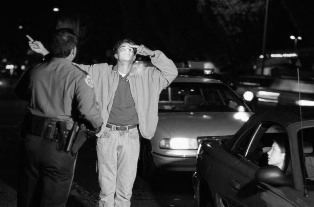
Field sobriety tests are one of the best-known parts of a DUI stop. An officer asks you to step out of the car and do a few physical and eye tests on the side of the road. The officer then uses how you did to decide whether to arrest you for DUI.
These tests are hard to do well even when you’re completely sober. Nerves, uneven ground, bad lighting, shoes, weather, injuries, age, and weight can all affect how you do. Here’s how the tests work in Washington, whether you have to do them, and how they can be challenged.
The Three Standardized Tests
Most officers are trained to use three standardized tests developed by the National Highway Traffic Safety Administration (NHTSA):
- Horizontal gaze nystagmus (HGN): The officer moves a pen or small light side to side and watches your eyes for jerking.
- Walk and turn: You take nine heel-to-toe steps along a line, turn in a specific way, and take nine steps back.
- One-leg stand: You stand on one foot, with the other foot about six inches off the ground, and count out loud.
The officer looks for specific “clues” on each test, like losing balance, stepping off the line, starting too soon, or using your arms for balance. Small mistakes can be counted against you.
Other Roadside Tests
Some officers also use tests that aren’t part of the standardized three, such as reciting the alphabet, counting backward, or touching your finger to your nose. These are not standardized, and their results are often easier to question.
Are Field Sobriety Tests Voluntary in Washington?
Washington doesn’t have a law that requires you to do field sobriety tests, and you can’t lose your license for declining them the way you can for refusing a breath test after arrest. But declining isn’t risk-free.
The Washington Supreme Court has held that field sobriety tests are not a “search,” so there is no constitutional right to refuse them. That means if you decline, your refusal can be used as evidence against you at trial (State v. Mecham, 186 Wn.2d 128 (2016)). The court also said the officer must have reasonable suspicion that you’re impaired, and the tests have to be reasonable in scope and length.
Whether to do the tests is a decision you make in the moment. If you have questions about what you did or didn’t do at your stop, talk to an attorney about how it affects your case.
The Portable Breath Test Is Different
At the roadside, an officer may also ask you to blow into a small handheld device. This is a portable or preliminary breath test (PBT). Under the state toxicologist’s rules, the PBT is voluntary, and the officer is supposed to tell you that (WAC 448-15-020; WAC 448-15-030).
The PBT can be used to show you had been drinking and to support an arrest, but its result can’t be used on its own to prove you were over the legal limit. It is also not the same as the official breath test at the station. That later test falls under Washington’s implied consent law, and refusing it has its own license consequences (RCW 46.20.308).
Why Field Sobriety Tests Can Be Unreliable
Field sobriety tests are only as good as the conditions and the officer giving them. Common problems include:
- Uneven, sloped, or slippery ground
- Poor lighting or flashing lights from patrol cars
- Footwear like heels, boots, or sandals
- Medical conditions, injuries, or balance problems
- Age or weight
- Fatigue, nerves, or cold weather
- Instructions that were unclear or not given the standard way
- Clues that were scored incorrectly or exaggerated in the report
How HGN Evidence Is Limited
The HGN eye test is treated as scientific evidence in Washington, and courts have found it generally accepted (State v. Baity, 140 Wn.2d 1 (2000)). But there are limits on how it can be used. The HGN test can show signs consistent with drinking, but it can’t prove impairment by itself. An officer can’t tell the jury the HGN test alone shows you were impaired (State v. Quaale, 182 Wn.2d 191 (2014)). How the test was given and described still matters.
How a DUI Attorney Can Challenge the Tests
A DUI attorney can look closely at the field sobriety tests in your case by:
- Reviewing body camera and dash camera video against the officer’s report
- Checking whether the officer gave the tests the standardized way
- Looking at the road, weather, lighting, and your footwear
- Identifying medical or physical issues that could explain your performance
- Questioning whether the officer had reasonable suspicion to ask for the tests
- Challenging how the results are described in court
Problems with the tests can matter at your pretrial hearing, in a motion to suppress evidence, or at trial. Every case is different, and no attorney can promise a result.
Related DUI Topics
- DUI arraignment
- DOL hearing and the seven-day deadline to request it
- Deferred prosecution
- Physical control
- Washington DUI defense
Contact a Washington DUI Attorney
If you did field sobriety tests during a DUI stop, or declined them, talk to an attorney about how that affects your case.
Kris Carrasco Attorney at Law
1014 Franklin Street, Vancouver, WA 98660
Phone: (360) 975-4673
Call or contact us online for a free consultation.
Charged with DUII in Oregon? See our Oregon DUII page.